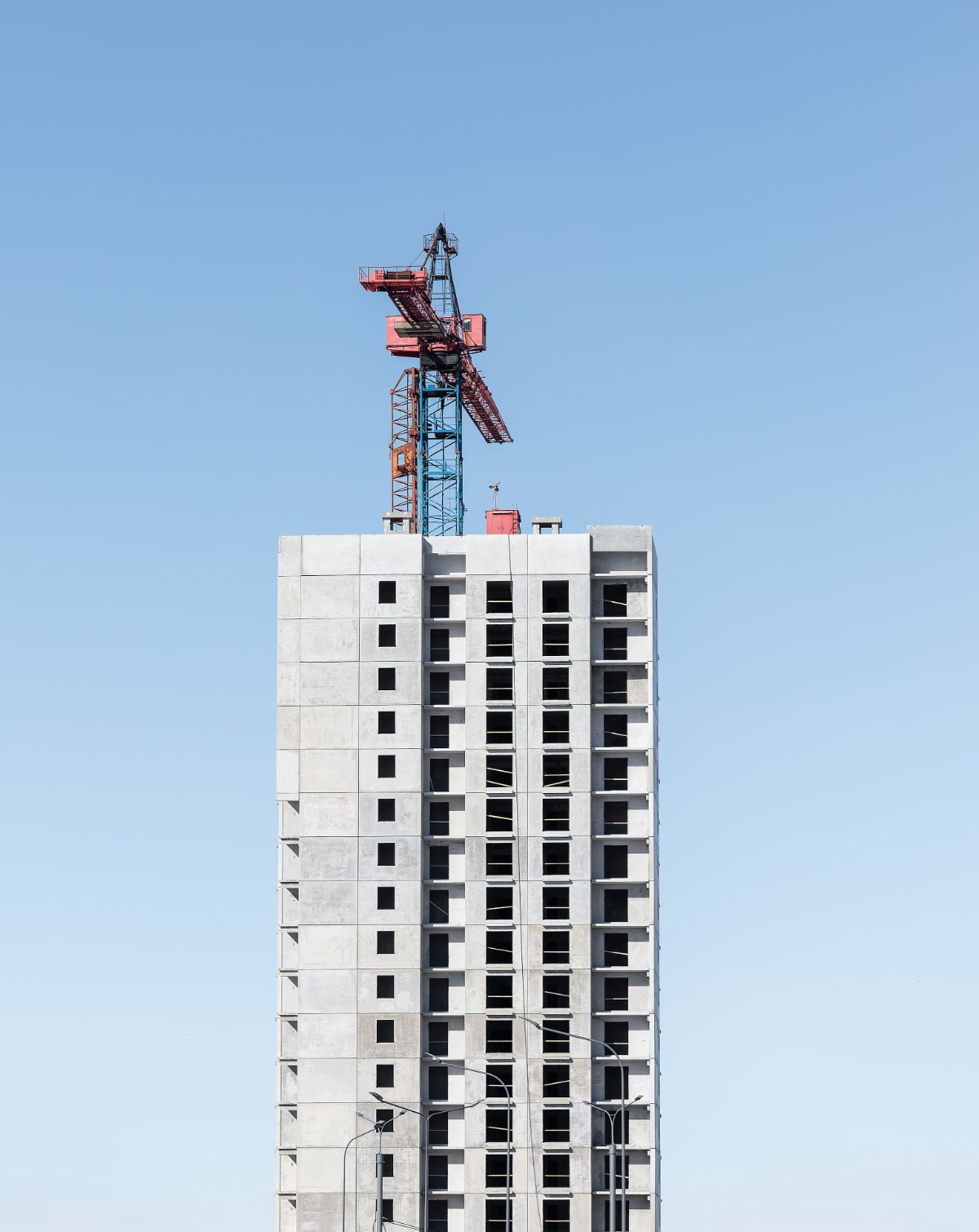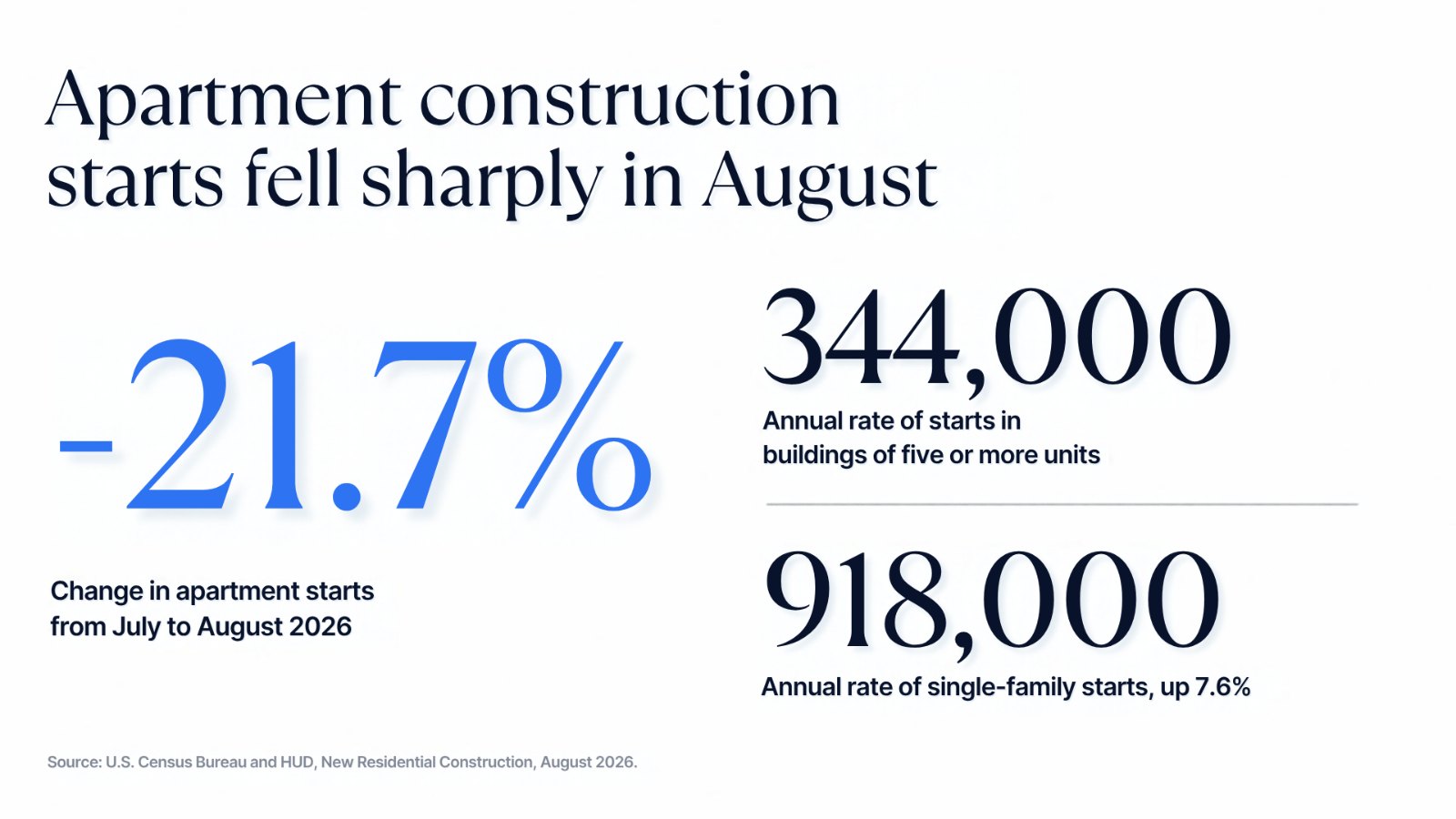
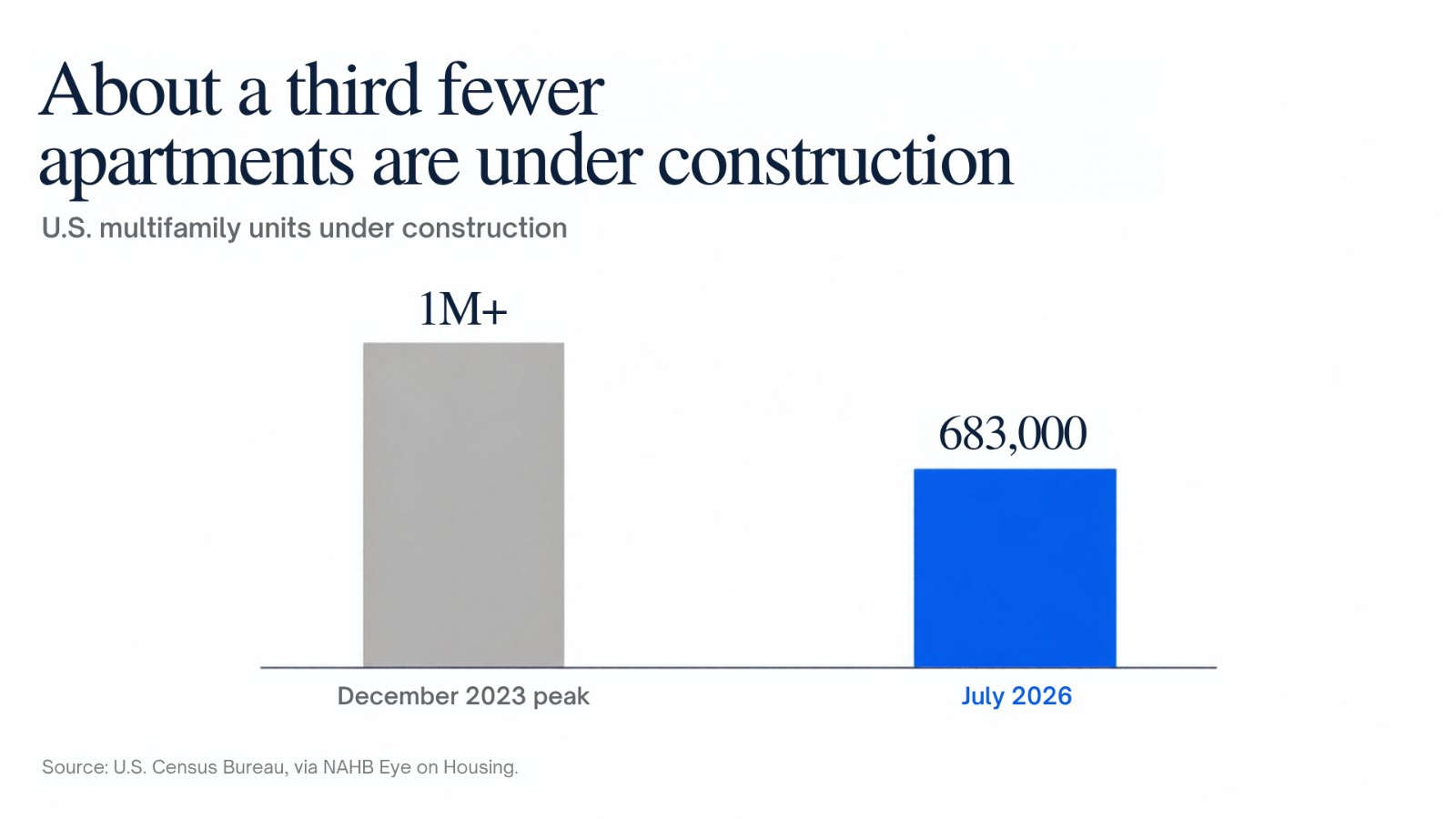
On September 17, the Census Bureau reported that construction began on apartments in buildings of five or more units at a seasonally adjusted annual rate of 344,000 in August, down 21.7% from July and about 15% below August 2025. Single-family starts rose 7.6% to 918,000, but builders’ expectations for future sales fell in September to their lowest level in nearly four years, according to the National Association of Home Builders. The number of multifamily units under construction has fallen to 683,000, from a peak above 1 million at the end of 2023.
Most coverage read the August figures as a sign of a weakening housing market. For rental housing, we think they say something more specific. Apartment construction is shrinking at a time when financing costs make new projects hard to justify and rents are only beginning to recover. The deliveries that have held rents down since 2023 will taper over the next two years, and fewer projects are starting to replace them. That shift moves the economics of the sector away from developers and toward owners of buildings that already exist.
The starts data is usually read as weakness
The common view treats falling starts as a demand signal. If builders are pulling back, the reasoning goes, they must expect fewer renters or buyers, and the sector as a whole is softening. The builder sentiment data and a 2.7% drop in permits in August are consistent with that reading. The 30-year mortgage rate, which rose to 7.28% on October 1, adds to the picture of a housing market under pressure.
For the for-sale market, much of that is fair. For apartments, the cause of the decline is mostly on the cost side. The National Association of Home Builders cited rising construction financing costs alongside higher mortgage rates, and the 10-year Treasury yield reached 5.3% on October 1. A project that required a construction loan and a permanent take-out at today’s rates, with rents growing about 1% a year, struggles to meet the return thresholds that lenders and equity investors require.
Supply will fall while demand rises
The two sides of the market are now moving in opposite directions. On the supply side, the volume of apartments under construction is about a third below its 2023 peak and still declining, and new starts at August’s pace would add far fewer units than the market absorbed in recent years. On the demand side, higher mortgage rates keep more households renting, and Yardi Matrix reports that occupancy has been rising as recent deliveries fill.
The time between a construction start and a completed building is typically two to three years for a mid-rise apartment project. That means today’s low starts will show up as low completions in 2028 and 2029, when the current oversupply is likely to have been absorbed in most markets.
The 2023 peak shows how fast the cycle can turn
The last cycle offers a clear comparison. In 2021 and 2022, low interest rates and strong rent growth drew a record wave of apartment starts. Those units arrived in 2023 through 2025, when demand had cooled, and national advertised rents did not rise at all in 2025 for the first time since 2020, according to Yardi Matrix. Developers who started projects at the top of the cycle delivered them into the weakest leasing market in years.
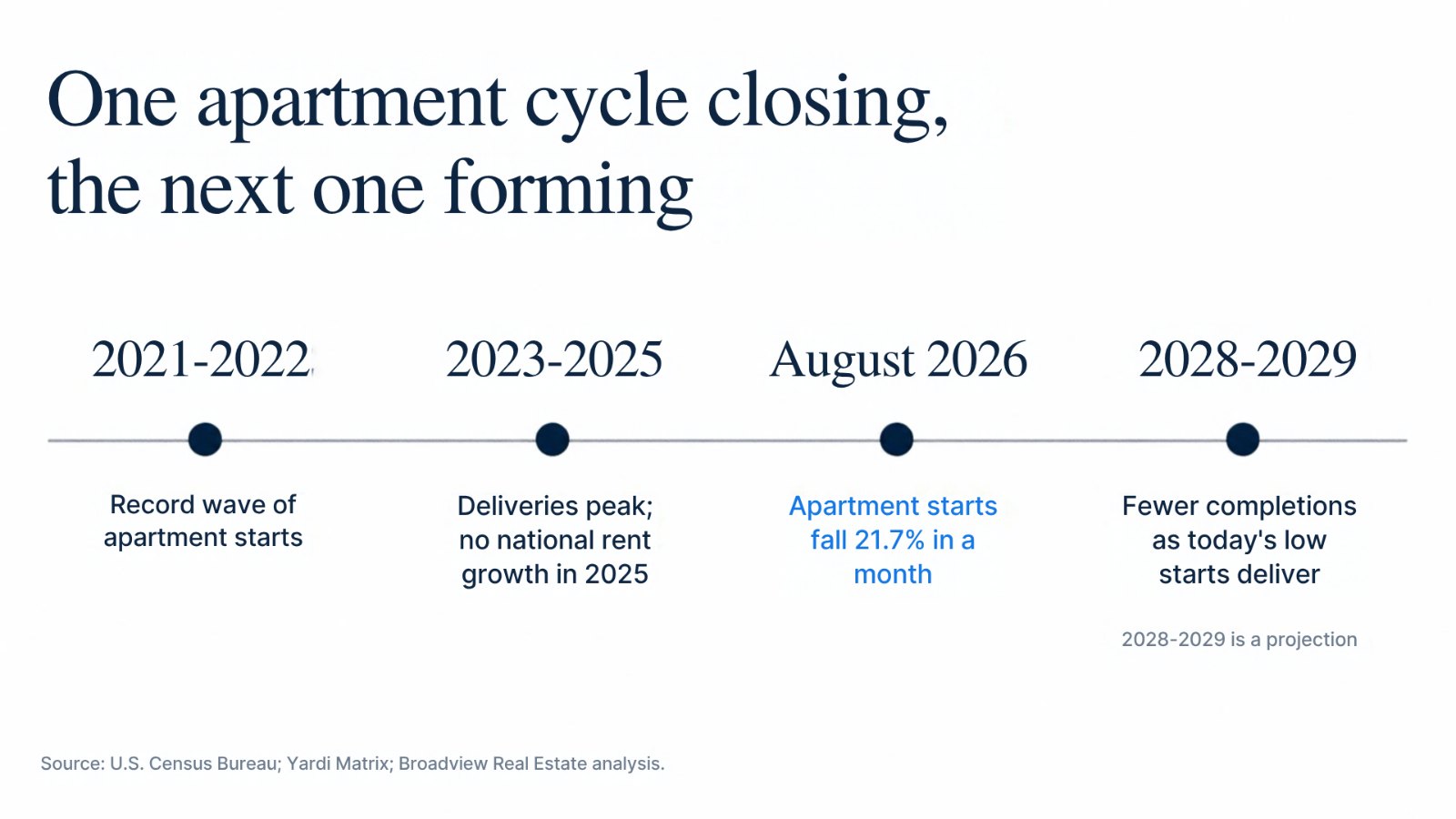
The current cycle is the reverse. Developers are starting few projects while rents are flat, and those projects will deliver into a market with less competing supply.
Existing owners gain, and developers wait
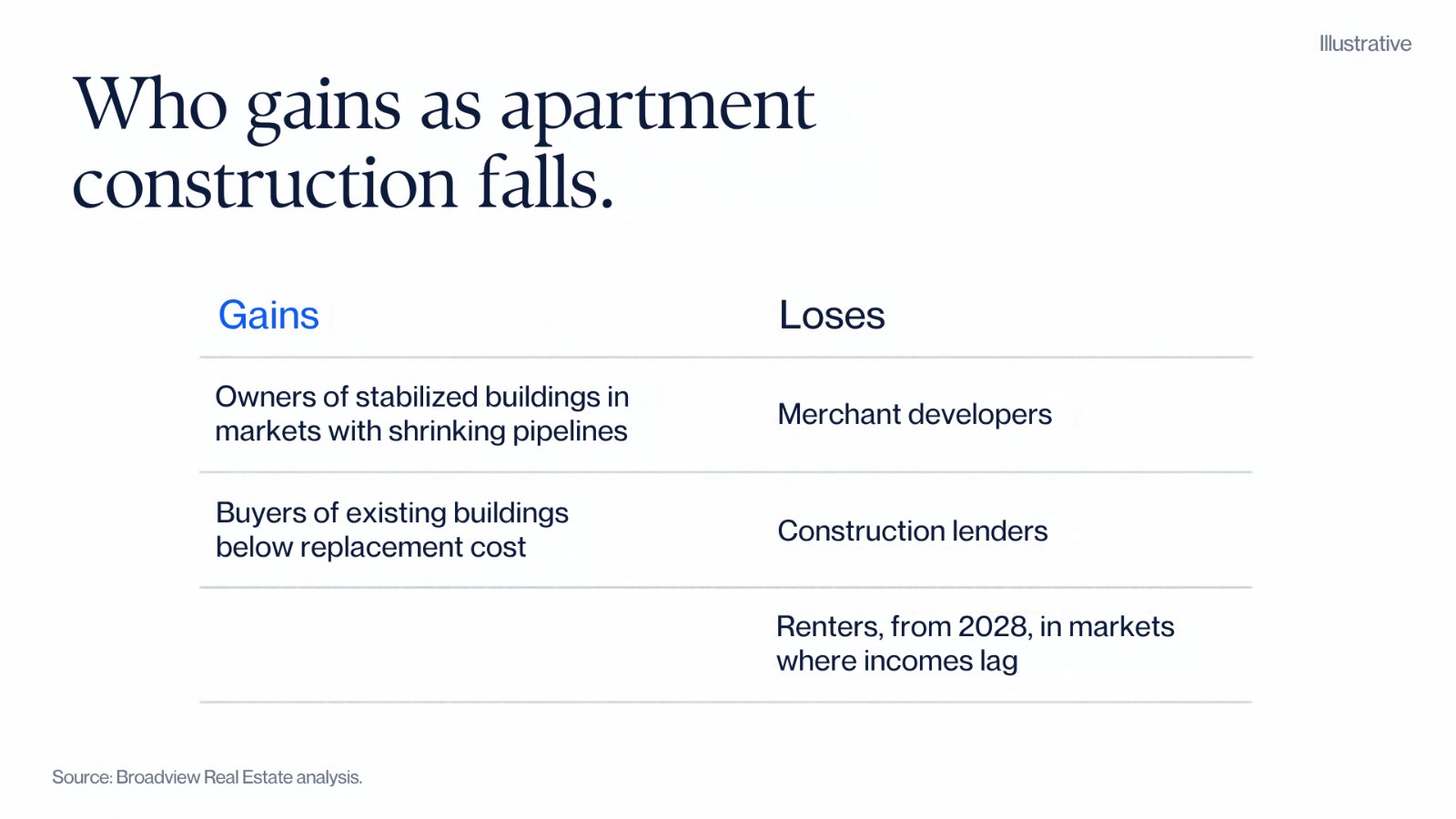
The clearest winners are owners of stabilized apartment buildings in markets where the pipeline is shrinking. They face less new competition from 2027 onward and can expect pricing power to return as occupancy rises. Buyers who acquire existing buildings at prices below what it would cost to build them gain the most, because rising construction costs raise the value of buildings that are already standing.
The losers are merchant developers, who build to sell on completion and need both construction financing and a buyer at an acceptable cap rate, and construction lenders whose pipelines shrink. In the near term, owners in markets with heavy recent deliveries, such as Austin and Phoenix, still face falling rents. Renters lose later: a shortage of new supply in 2028 and 2029 will push rents up in markets where incomes have not kept pace.
A reasonable objection is that starts can rebound quickly
The case for a rebound is that apartment construction responds quickly to better conditions. Multifamily permits were still 4.3% above their year-earlier level in August on a three-month average basis, according to Yield PRO’s analysis of the Census data, and a fall in interest rates could bring many permitted projects back to life within months.
We agree that permits give developers an option to restart. Exercising it requires financing at costs that justify the project, and at a 5.3% Treasury and flat rents, many permitted projects do not meet that test. Even a quick rebound in starts would deliver units no earlier than 2028, which leaves several years in which existing buildings face less new competition.
The supply cliff is the signal for the sector
For residential real estate, the August starts data is less about housing demand than about the cost of building. Apartment construction is falling because it does not pay at current financing costs, and that leaves the next phase of the cycle to the owners of existing buildings. The figure that will matter most in 2028 is the number of apartments that are not being started today.
“The figure that will matter most in 2028 is the number of apartments that are not being started today.”
Sources: U.S. Census Bureau and HUD, New Residential Construction (August 2026), via Red Book Lumber Data; TD Economics; NAHB Eye on Housing; Floor Covering News; Yield PRO; Freddie Mac; Bisnow via CRE Daily; Yardi Matrix.