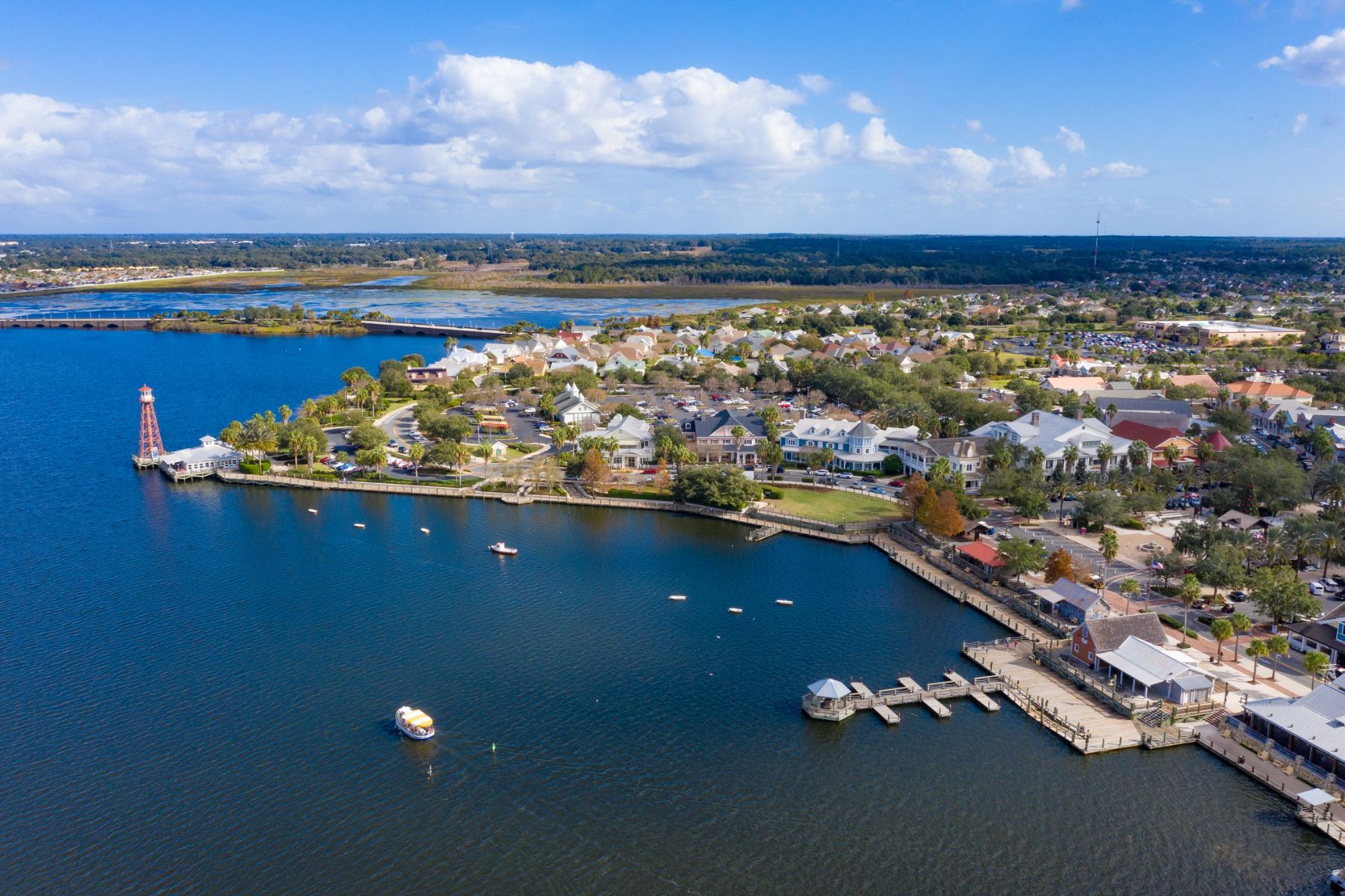
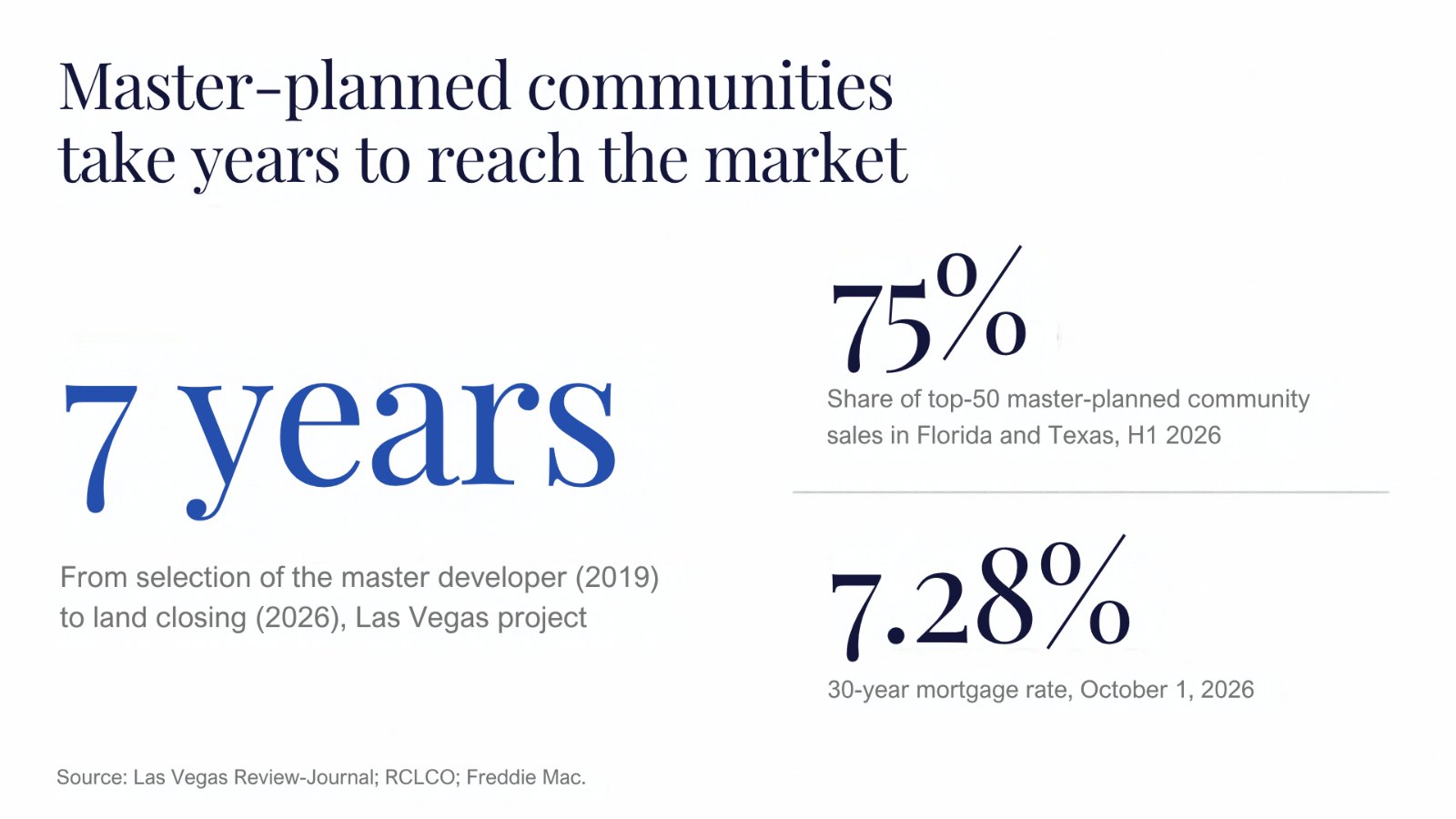
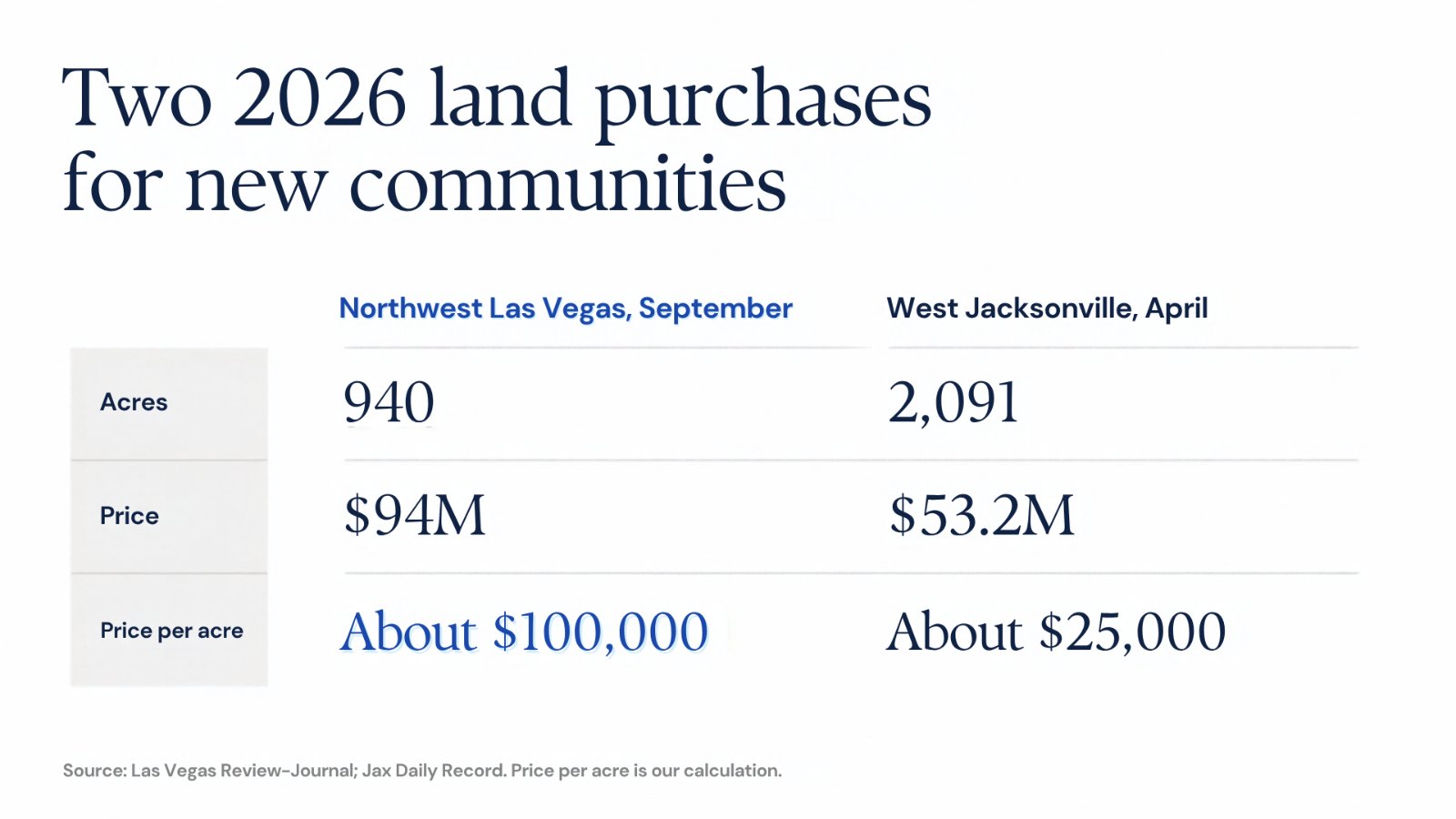
In early September, developers closed on 940 acres in northwest Las Vegas for $94 million, about $100,000 an acre, for what the Las Vegas Review-Journal described as the city’s biggest new master-planned community in years. The plan includes two school sites, land for commercial use and about 90 acres of parks and trails. The city council had selected the master developer in 2019, seven years before the land changed hands. On October 2, a Florida developer that had just bought a 68-acre mixed-use site near The Villages for $13 million said it would wait for a joint venture partner before building, because the market was not yet ready.
The two deals capture the position of master-planned community capital this autumn. Mortgage rates are above 7%, and builders are slowing lot takedowns outside the strongest communities. We think that is the right time to acquire land for new communities, provided the capital is structured to wait. The return in this sector comes from buying entitled land when builders are retreating and spending on infrastructure only as fast as lots can be sold. Capital that commits to both at once, with debt, is taking the risk that undid many land investors in the last downturn.
A weak builder market looks like a reason to stay away
The case for caution is strong. The National Association of Home Builders’ confidence index fell to 32 in September, its lowest reading of 2026, and 66% of builders used sales incentives. The 30-year mortgage rate reached 7.28% on October 1. Builders who pay option fees of about 8.5% a year on land-banked lots have every reason to delay takedowns in communities that do not yet sell quickly. On that view, new master-planned community land is the last place to put capital.
Land is cheapest when builders retreat
The difficulty with that view is timing. A master-planned community takes years to entitle and build before it produces its first lot sale, as the Las Vegas project shows. Land bought today will deliver lots into the housing market of 2028 and later, when the apartment and single-family construction slowdown of 2026 may have left the market short of new homes. Buying land when builder demand is weakest usually means paying less for it and facing less competition from builders’ own land teams.
Land prices also vary widely by market. The Las Vegas acreage traded at about $100,000 an acre. In April, a Florida developer bought 2,091 acres west of Jacksonville, approved for up to 2,740 homes, for $53.2 million, or about $25,000 an acre. The difference reflects location and the state of entitlements and infrastructure, and the underwriting has to account for both.
How we would put capital into master-planned communities now
Acquisitions should focus on entitled land in regions with proven demand for master-planned communities. RCLCO’s mid-year survey found that 75% of sales among the 50 top-selling communities were in Florida and Texas, and those markets have the deepest pool of builders and buyers. Diligence should test entitlements and utility capacity, and it should weigh the sales pace of nearby communities more heavily than headline population growth.
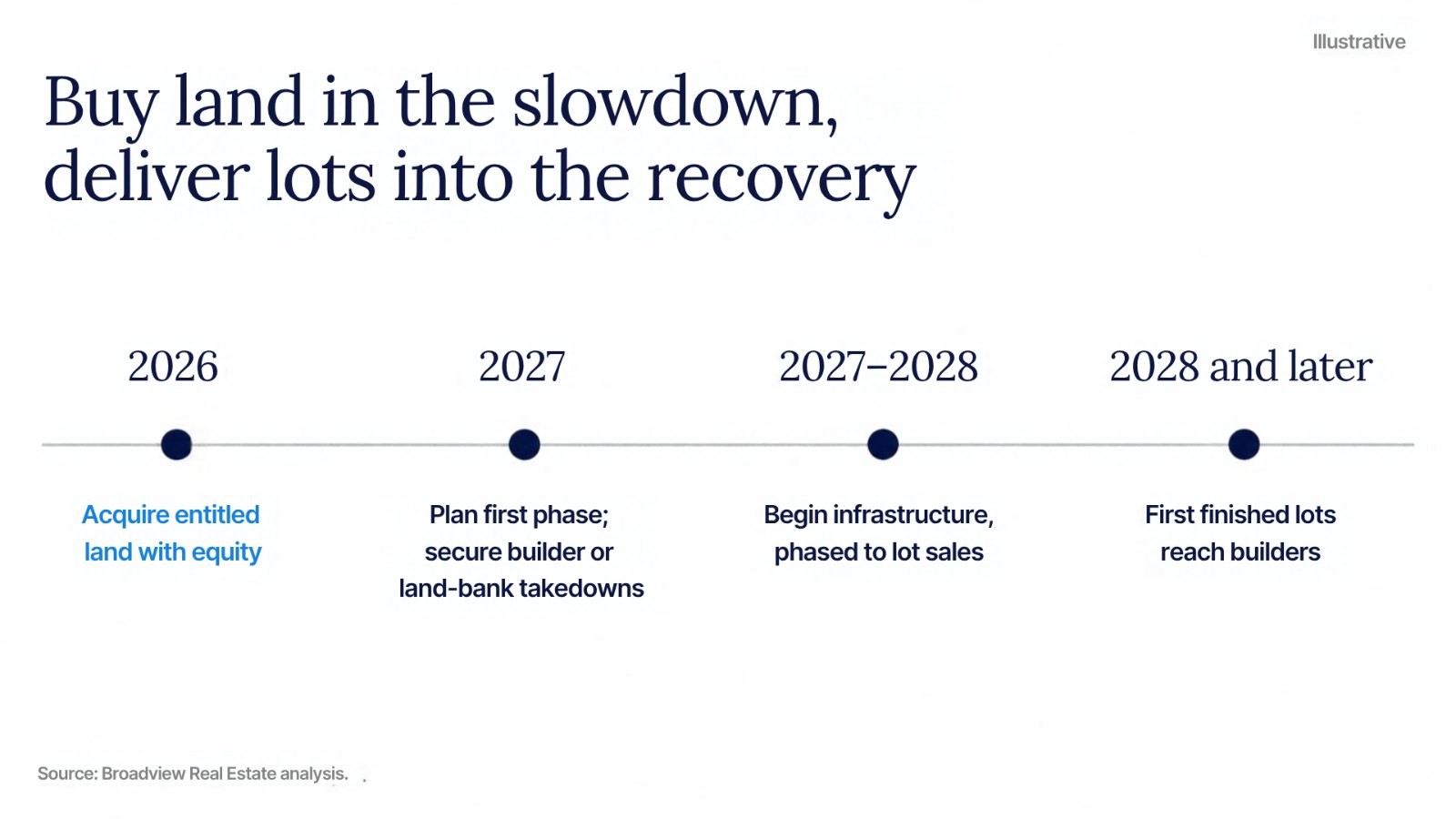
Structure should use equity, or very low debt, for land acquisition, and should phase infrastructure spending to match expected lot sales. The most expensive mistake in this sector is building roads and utilities for lots that builders are not yet ready to buy. Partnering with a land banker or a builder that will commit to takedowns for each phase moves part of that risk to parties paid to carry it.
“The most expensive mistake in this sector is building roads and utilities for lots that builders are not yet ready to buy.”
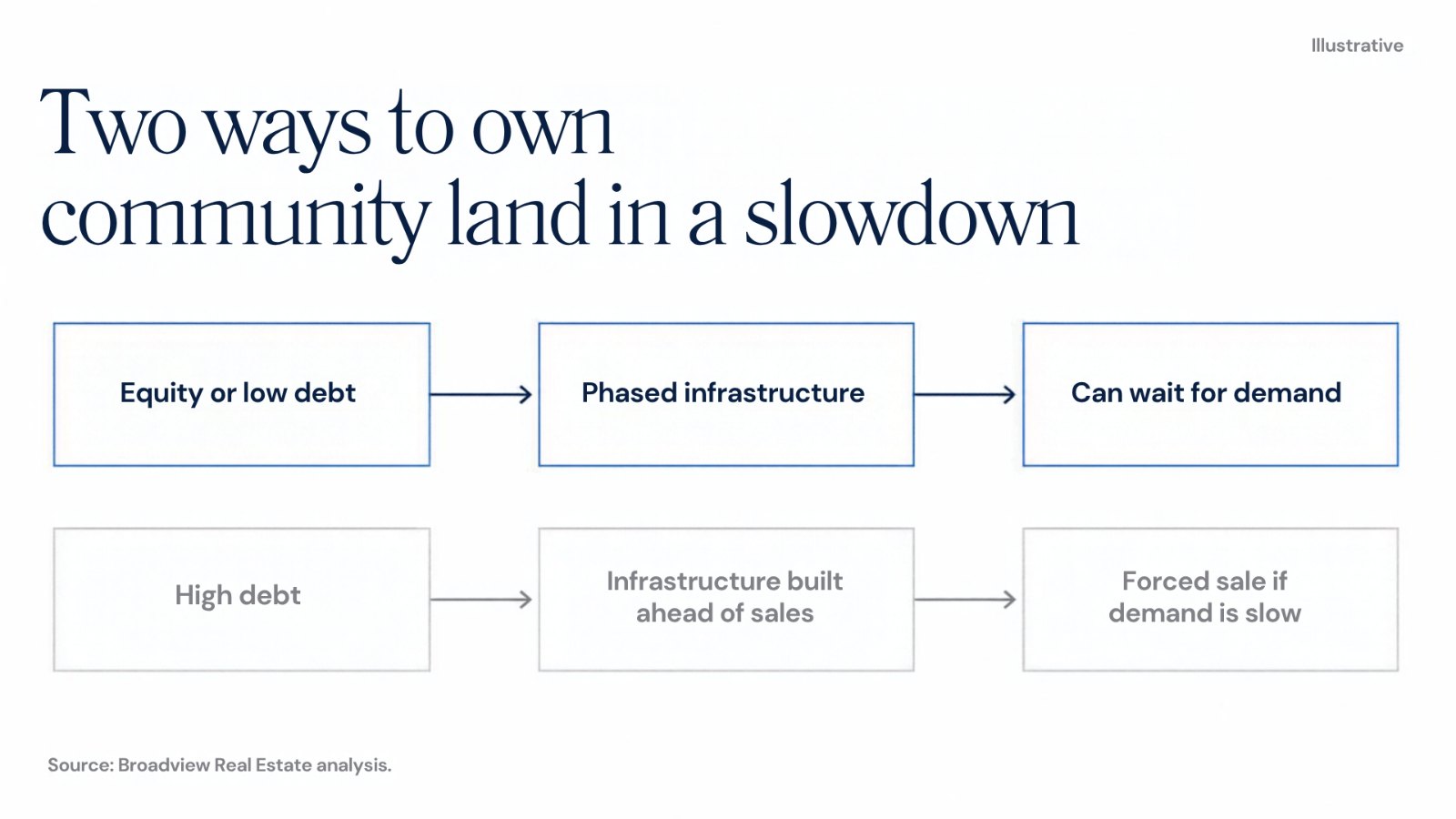
Timing should favor acquisition now and development later. Capital that buys land in 2026 and begins major infrastructure in 2027 or 2028 can match its spending to the recovery in builder demand, instead of committing in advance.
The 2007 cycle is the strongest objection
A reasonable objection draws on the last downturn. In 2007 to 2009, many land investors bought or held master-planned community land on the assumption that demand would return quickly. When it did not, debt on that land and the cost of half-built infrastructure forced sales at deep losses, and builders walked away from optioned lots.
We take that history seriously, and it shapes the structure we would use. The losses came mainly from debt and premature development, both of which can be avoided. Land bought with equity and developed in phases can wait for demand without a forced sale. The option and pooling structures now common in land banking also make builder commitments more reliable than they were then.
Buy the land, and let the lots wait
For investors in master-planned communities, the current slowdown is a period to acquire land and prepare it, without racing to build. The Las Vegas project took seven years from the selection of its developer to the closing of its land, and the Florida developer near The Villages chose to wait for a partner before building. Capital that is structured to wait in the same way will own land when builders return, and builders return to the places where land is ready and the costs of holding it are under control.
Sources: Las Vegas Review-Journal (September 2026); GrowthSpotter (October 2026); Jax Daily Record (April 2026); NAHB; Freddie Mac; RCLCO via MBA NewsLink; Millrose via Hunterbrook.