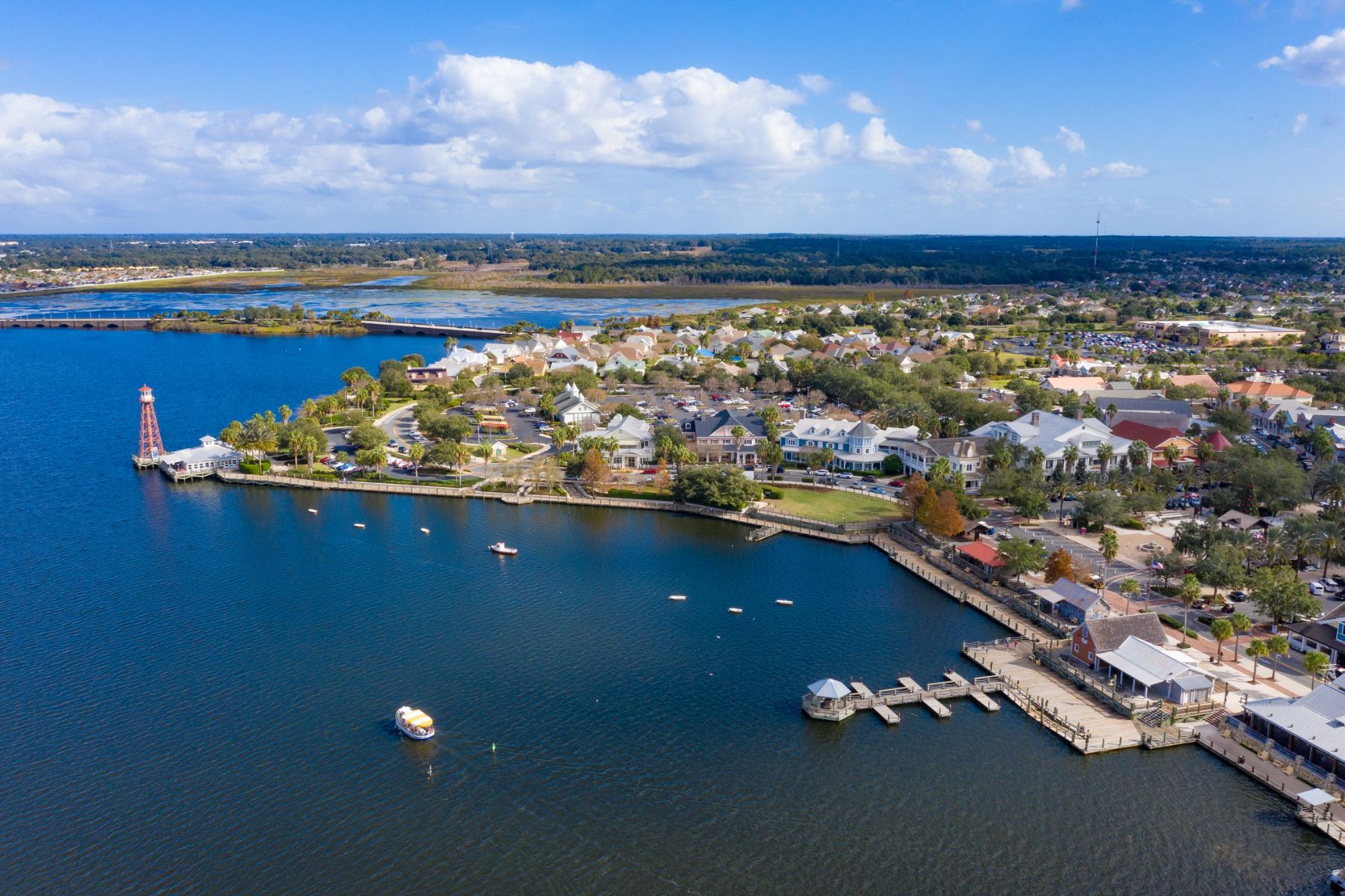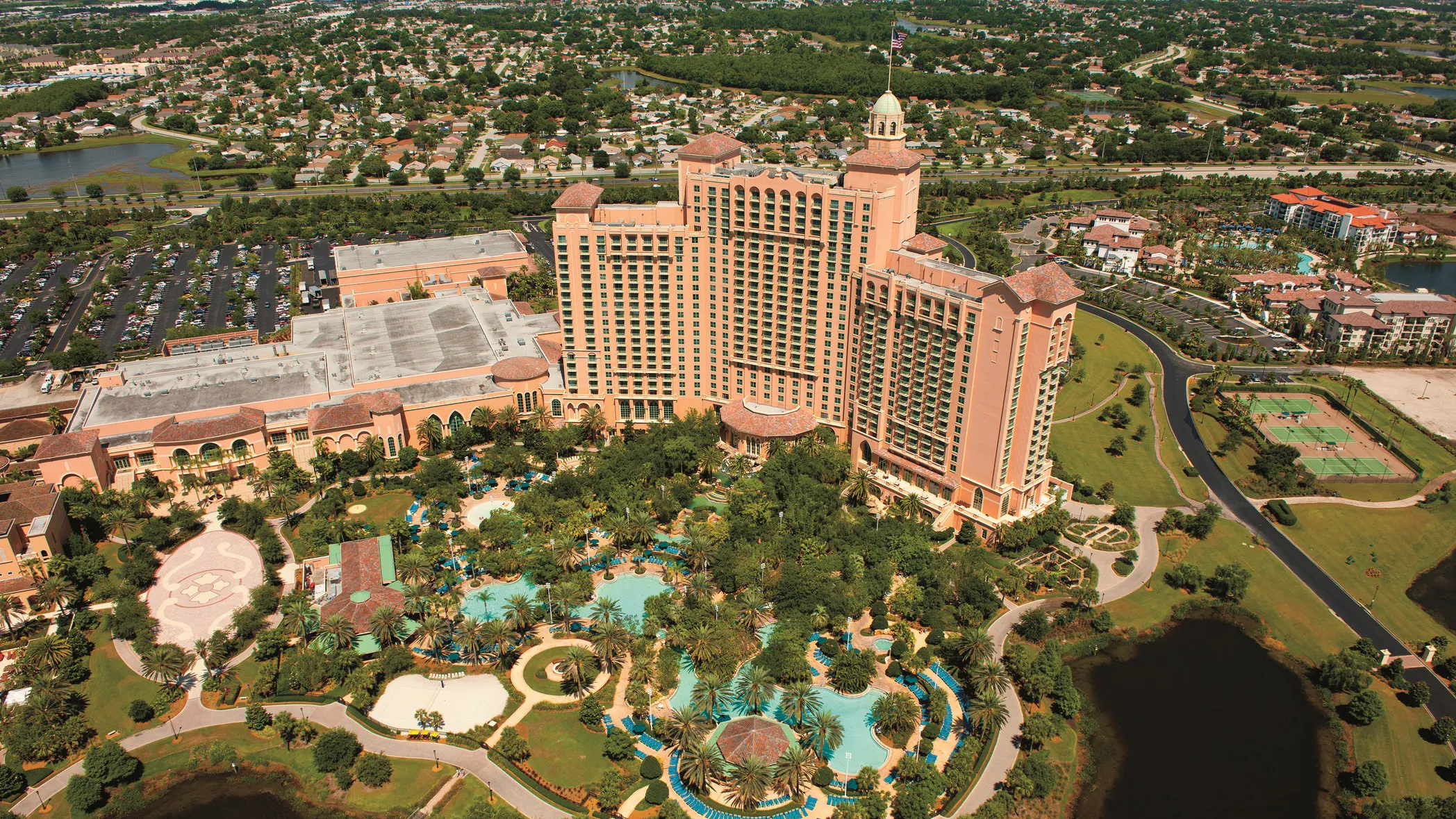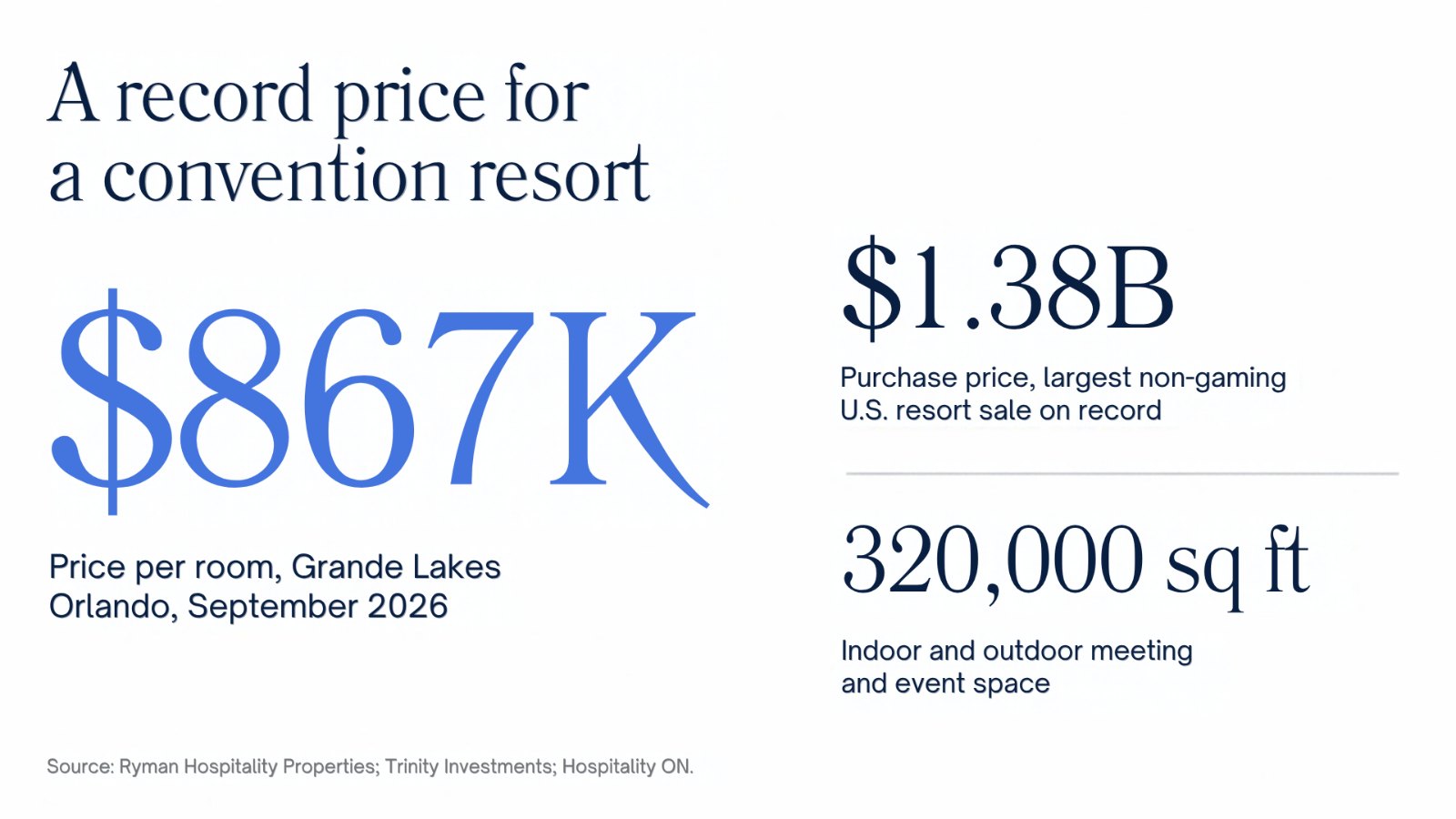
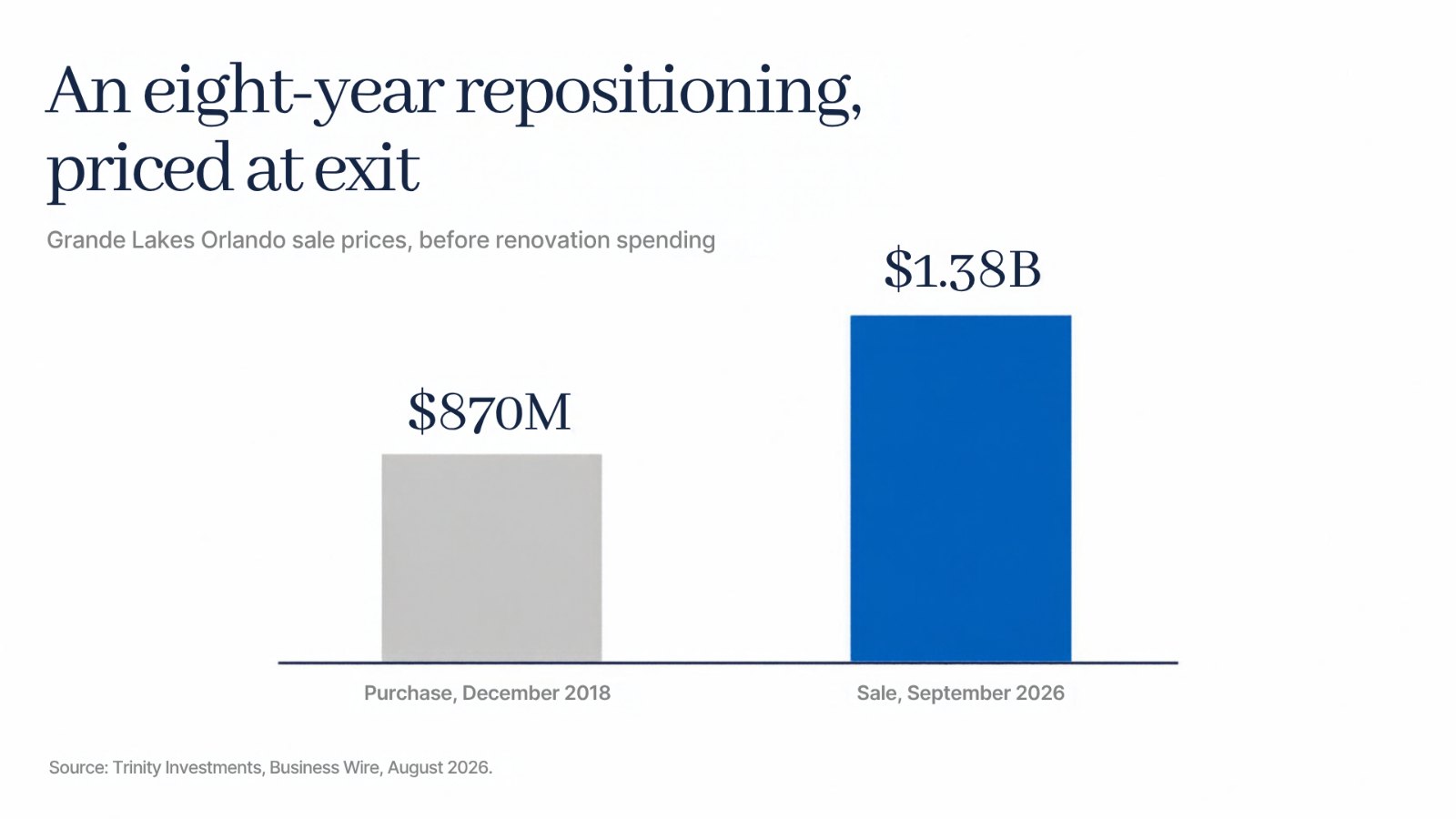
On September 1, Ryman Hospitality Properties closed its $1.38 billion purchase of Grande Lakes Orlando, a 1,010-room JW Marriott and a 582-room Ritz-Carlton set on more than 400 acres with about 320,000 square feet of meeting space. The seller, Trinity Investments, had bought the resort in December 2018 for $870 million and described the sale as the largest non-gaming U.S. resort transaction on record. At roughly $867,000 per room, the price sits among the highest paid for a large American resort in recent years.
A month later, the 10-year Treasury yield reached 5.3%, its highest level since 2002. Read together, the two events say something specific about how hotel capital should be deployed now. With rates at this level, we think hotel investors should pay for visibility of future revenue, which in this sector means group business booked years in advance, and should lock in their debt cost for a decade before committing equity. Ryman did both, and the structure of its purchase is a better guide to current hotel investing than the headline price.
Trophy prices look like a bet on luxury travel
The obvious reading of the deal is that institutional buyers are paying record prices for luxury leisure resorts. Luxury was the strongest segment of the hotel market in 2025, when it grew RevPAR while lower tiers declined, and other trophy assets have traded this year, including Host Hotels & Resorts’ sale of two Four Seasons resorts for a combined $1.1 billion.
That reading misses why this particular buyer paid this particular price. Ryman specializes in group-oriented convention resorts, and it described Orlando as the country’s largest meetings market. The company said the purchase lets it rotate large group customers among its convention resorts, which is a statement about the predictability of bookings more than about leisure demand.
Group business is the closest thing in hotels to contracted income
Most hotels sell their rooms night by night, and their revenue can fall quickly when travel demand weakens. Large group and convention business works differently. Associations and corporations book meetings years in advance under contracts that usually include attrition and cancellation terms, so a convention resort enters each year with a large share of its rooms already sold. For an investor, that booking pace is the hotel equivalent of a lease roll schedule.
That visibility matters more when the cost of capital rises. A buyer facing a 5.3% Treasury needs confidence in next year’s income before paying for it, and group bookings provide some of that confidence where transient demand cannot. The same logic explains the price per room: Grande Lakes sells a combination of rooms, meeting space and outdoor amenities that is very hard to replicate, in a market where new resorts of this scale take years to build.
Ryman fixed its debt cost before the rate move
The financing is the second lesson. In August, between signing and closing, Ryman issued $700 million of senior notes due 2035 at 6.25% and completed a common stock offering. Those notes priced several weeks before the 10-year yield moved to 5.3%. The company accepted some near-term dilution: on the day it closed, Ryman updated its 2026 outlook, and market reports described a reduction in its adjusted funds from operations guidance even as it added $30 million to $35 million of expected adjusted EBITDAre from Grande Lakes for the four months it will own the resort this year.
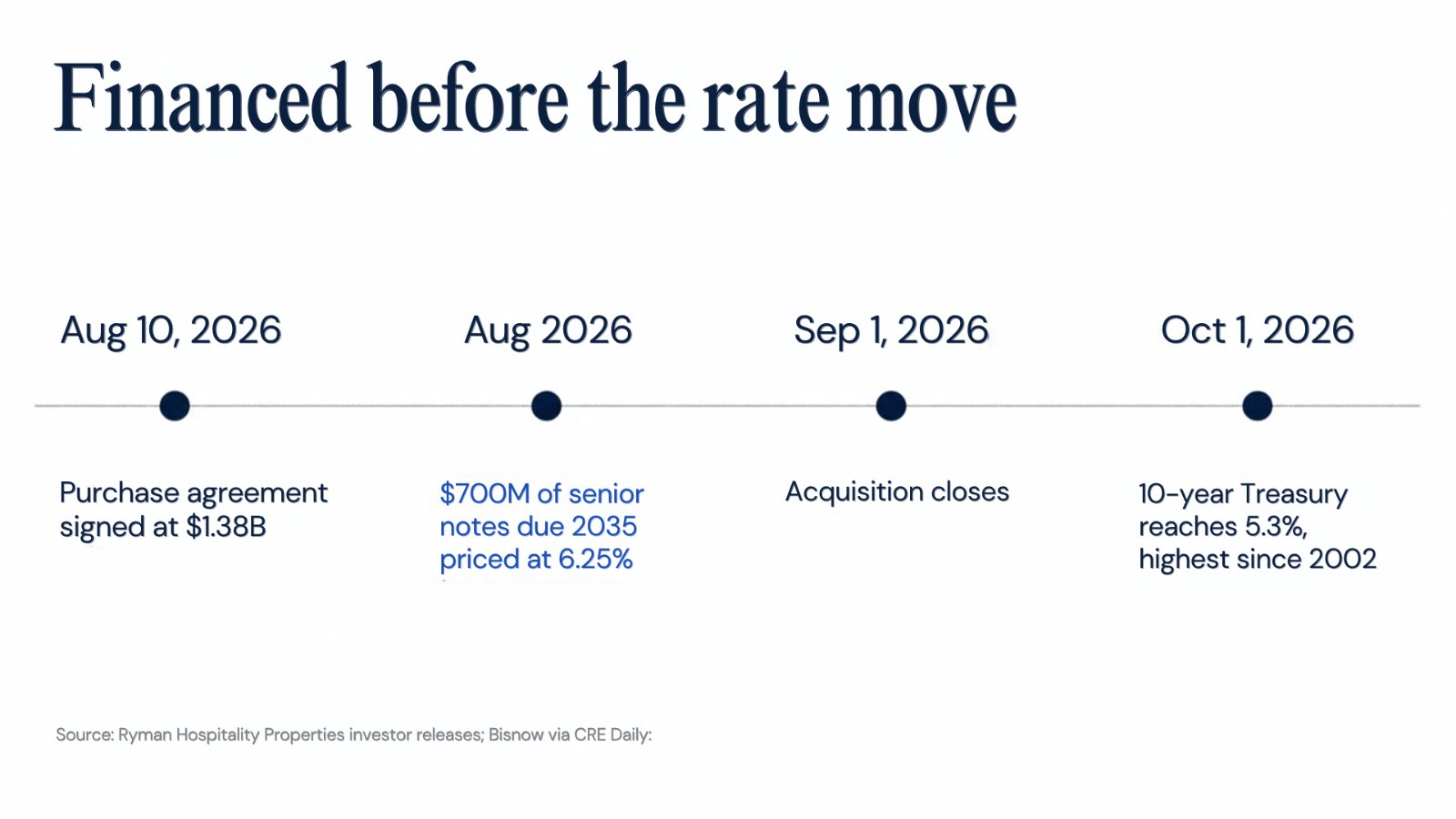
We read that as a deliberate trade. Long-dated fixed-rate debt and new equity cost more in the first year than short-term floating debt would have. They also remove refinancing risk for nine years at a time when, as lenders said at Bisnow’s finance event on October 1, leverage is falling and underwriting is tightening.
The seller’s return came from repositioning over a long hold
Trinity’s result gives the other side of the trade. The firm sold for $510 million more than it paid, before accounting for the capital it spent on a full renovation and repositioning. That repositioning took most of an eight-year hold and included a pandemic. The return came from operating and capital work over a long period, and the exit came to a buyer whose business model valued the finished asset more than a generalist would.
Hotel investors can take two practical points from that. Value-add hotel plans need hold periods long enough to survive a downturn, and the best exit is often to a specialist owner whose platform can use the asset in ways others cannot.
The objection is that group business is cyclical
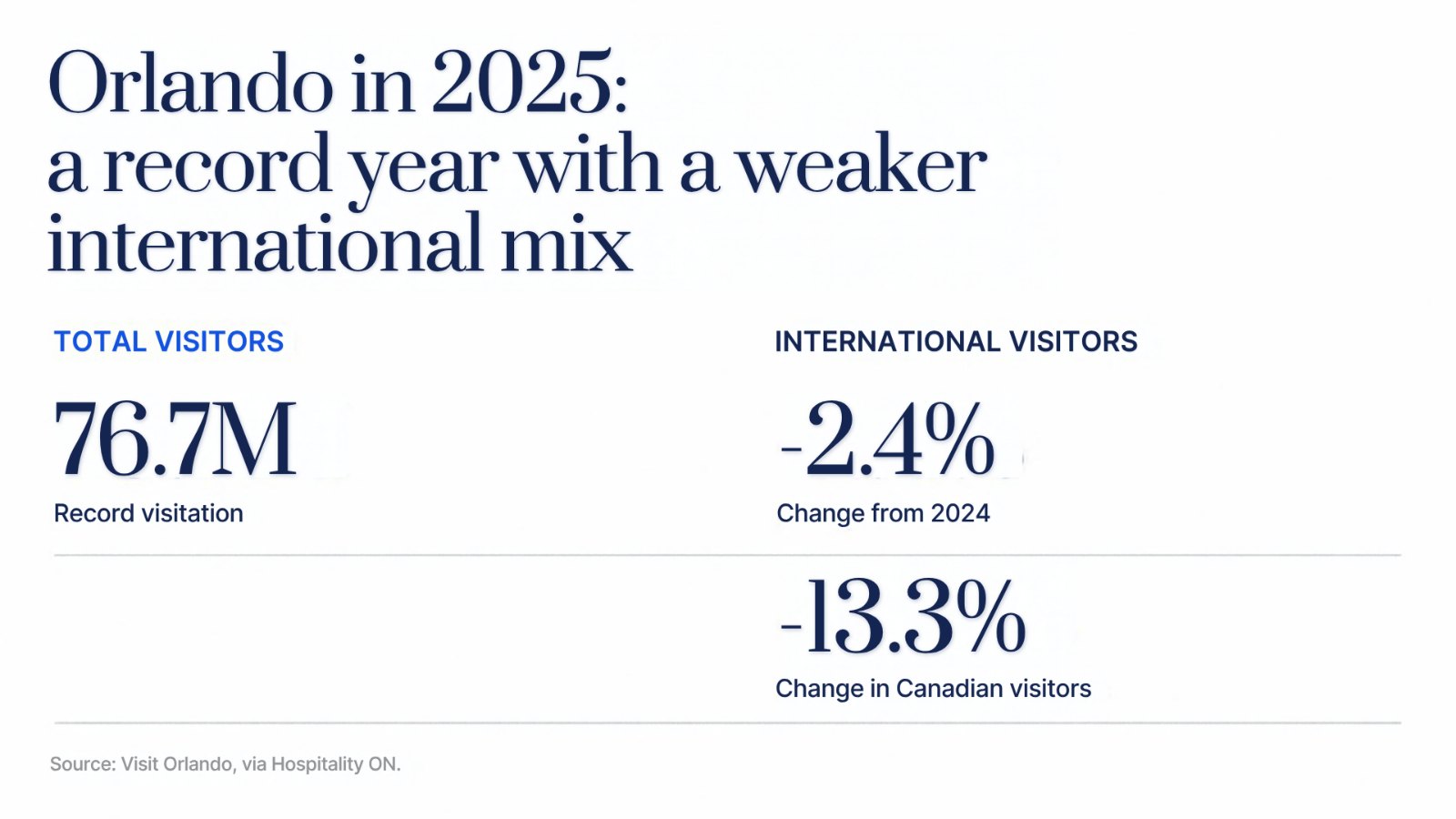
A fair objection is that group demand is among the first casualties of a recession, when corporations cut meeting budgets and associations shrink events. A single resort of this size also concentrates risk in one market. Orlando had a record 76.7 million visitors in 2025, according to Visit Orlando as reported by Hospitality ON, but international visitors fell 2.4% and Canadian visitors 13.3%.
We accept both points. Group contracts reduce volatility without removing it, and attrition clauses protect revenue only partly in a severe downturn. The answer lies in structure. A portfolio of convention resorts across several markets can move groups between them, and long-dated fixed debt keeps a weak year from becoming a refinancing problem. Entry prices should also assume that group pace weakens at some point during the hold.
Pay for visibility, and fix the cost of capital
For hotel investors deploying capital at today’s rates, we would set two priorities. The first is to weight acquisitions toward assets whose revenue can be seen in advance, through group booking pace or very limited competing supply. The second is to secure fixed-rate financing that runs well past the business plan, at or before signing, and to accept the near-term dilution that comes with it. Value-add plans should also be underwritten over hold periods long enough to include a downturn.
Ryman paid a record price for a resort in a market it already knows, and financed it before rates rose. In a sector where most revenue is sold one night at a time, the assets worth paying up for are the ones whose future nights are already sold.
“In a sector where most revenue is sold one night at a time, the assets worth paying up for are the ones whose future nights are already sold.”
Sources: Ryman Hospitality Properties (September 1, 2026, and investor releases); Trinity Investments (Business Wire, August 2026); Hospitality ON; Pulse 2.0; Hotel Dive; MarketScreener; STR via MMCG Invest; Bisnow via CRE Daily.