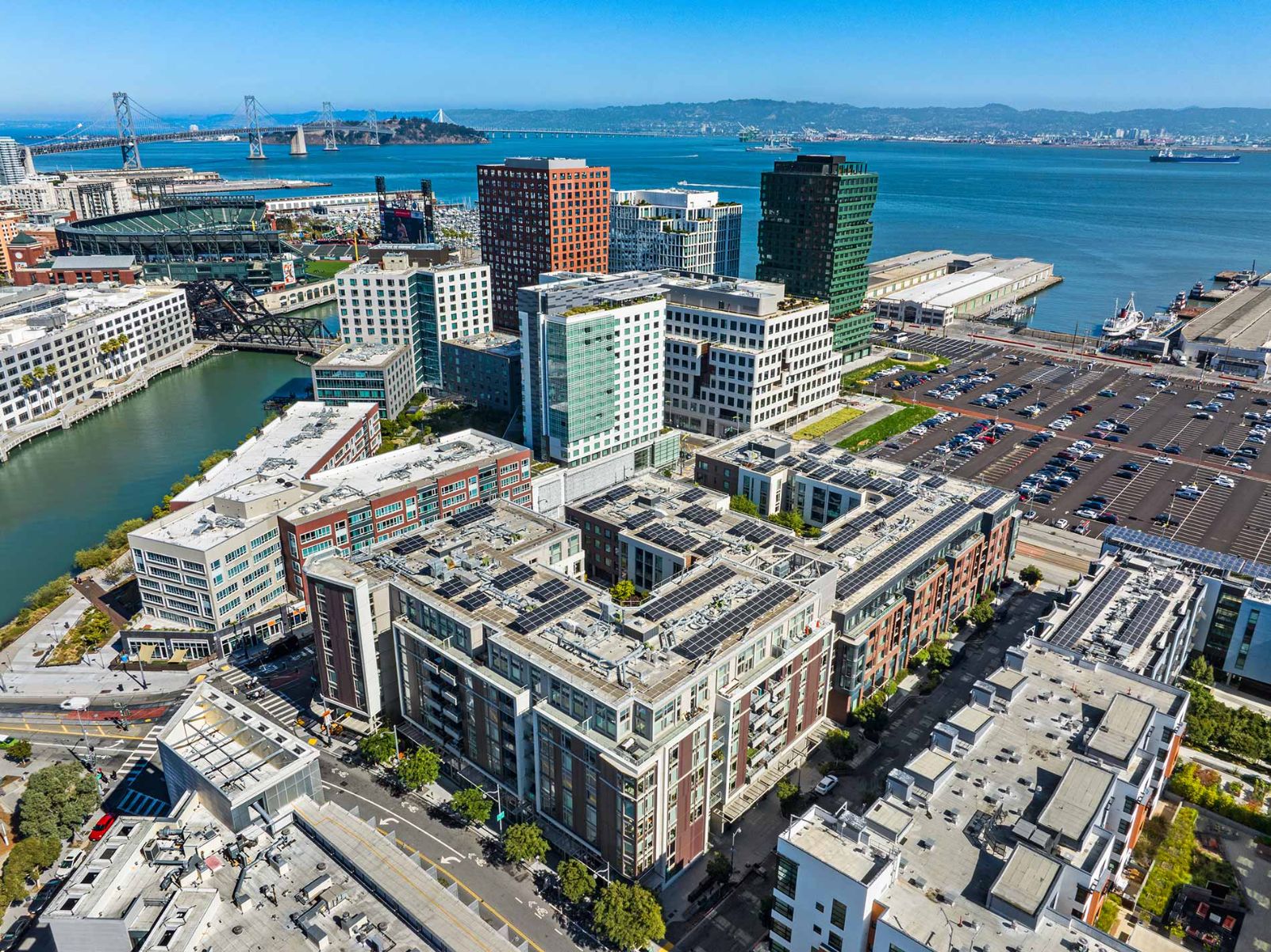
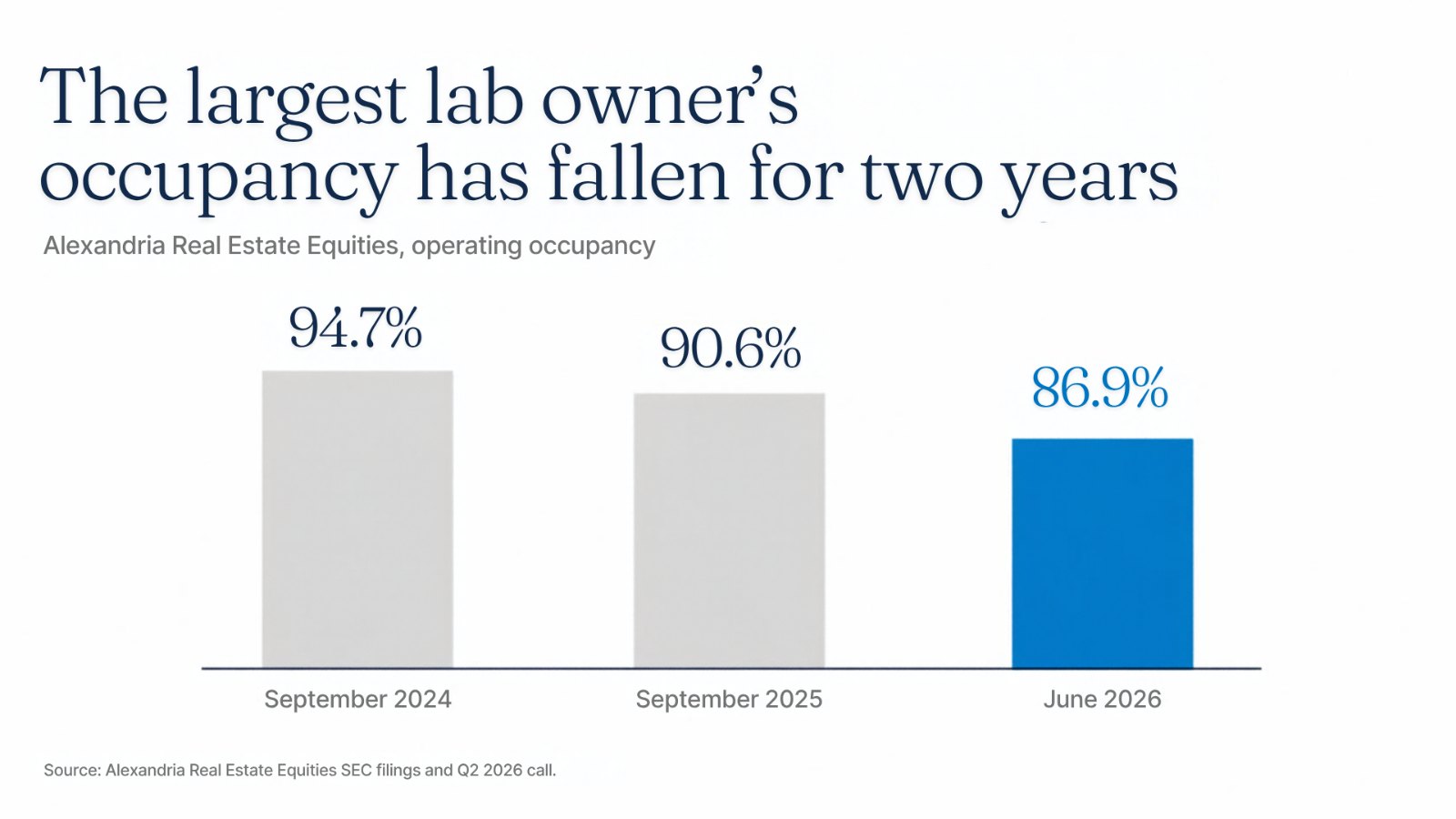
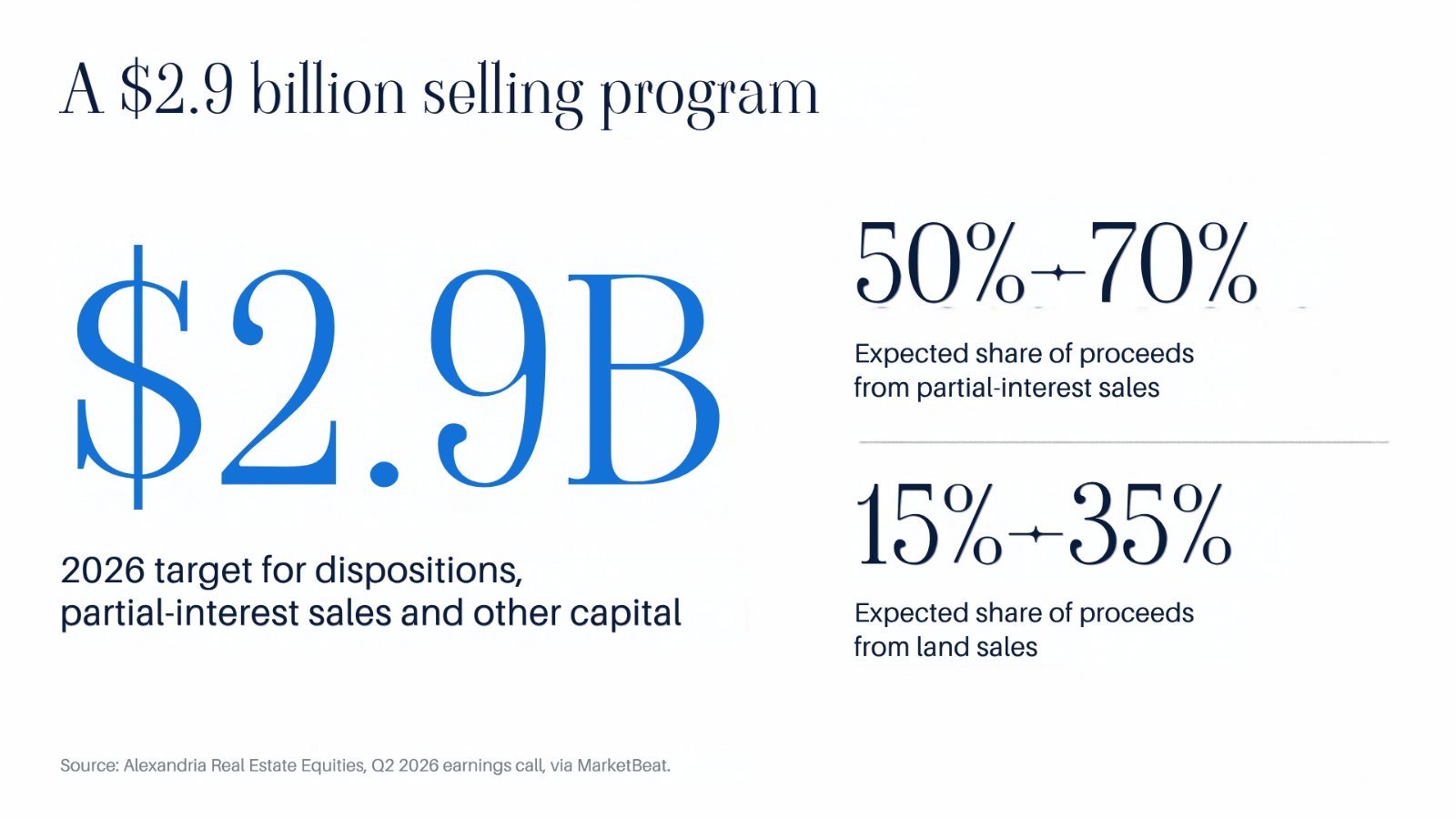
Alexandria Real Estate Equities, the largest owner of life sciences real estate in the United States, expected the bulk of its 2026 asset sales to close around September. The company has set a target of $2.9 billion of dispositions, partial-interest sales and other capital for the year. When it reported second-quarter results in August, 46% of that was completed or pending, and another 38% was in process. Its operating occupancy had fallen to 86.9%, from 94.7% two years earlier, and leverage stood at seven times annualized adjusted EBITDA.
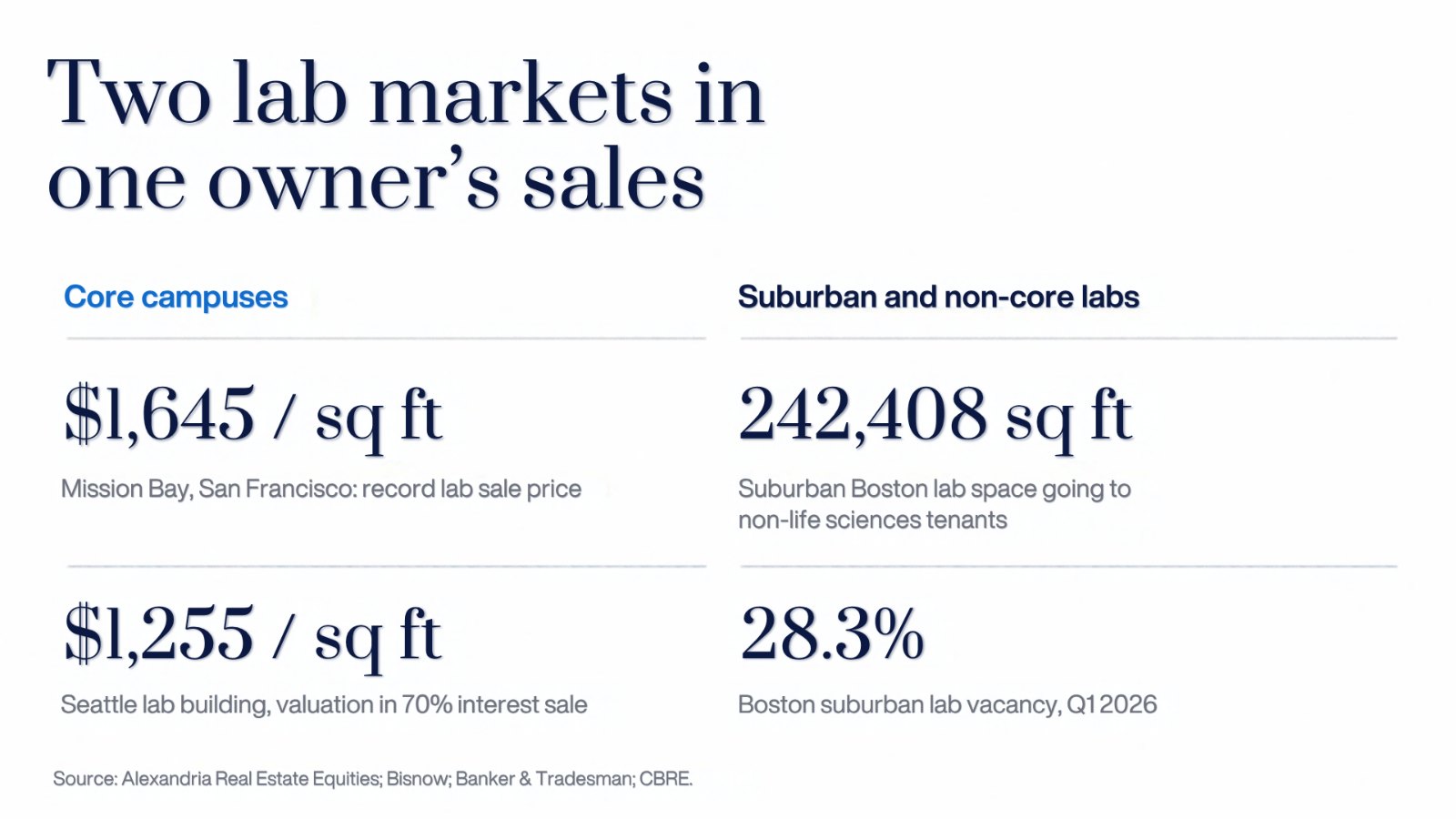
The sales have produced two very different sets of prices. At one end, Alexandria sold 409 and 499 Illinois Street in San Francisco’s Mission Bay for $1,645 per square foot, a record for a lab asset in that city, and sold a 70% interest in a Seattle lab building at a valuation of $1,255 per square foot. At the other end, it has signed letters of intent to lease 242,408 square feet of lab space in suburban Boston to non-life sciences tenants for what it calls lower-cost alternative uses. We think this split defines how capital should enter life sciences real estate now. The best campuses should be bought through partial interests from motivated sellers, and commodity labs should be bought only at prices that work for their next-best use.
Distress is usually read as a reason to buy the whole sector
The common response to a forced seller is to buy what it sells. Life sciences fundamentals are weak but stabilizing: Cushman & Wakefield reports national lab vacancy of 24.3% and a construction pipeline of only 2% of inventory, while venture funding rose 30% in the first half. Alexandria’s founder described 2025 as the fifth year of a life science bear market. On that reading, a broad bet on recovery, made while the largest owner is selling, should pay off as the cycle turns.
The pricing data suggests a broad bet is the wrong tool. Cushman & Wakefield reports that research and development property sales fell 24% to $1.3 billion in the second quarter, yet pricing rose 7% from a year earlier. Fewer assets are trading, and those that do are mostly the best ones.
The market has separated into two asset classes
Alexandria’s own sales show the split. Its megacampus buildings in core clusters, leased to established tenants, continue to command record prices from institutional buyers. Its non-core suburban and tertiary-market assets are being sold, leased to other uses or held as land for residential developers. Alexandria expects land to make up 15% to 35% of its 2026 proceeds, and partial-interest sales 50% to 70%.
The suburban numbers explain why. CBRE reported Boston suburban lab vacancy of 28.3% in the first quarter, and Alexandria has said oversupply in some tertiary submarkets may take four to five years to clear. A lab building in those submarkets competes with dozens of similar buildings for a small number of tenants, and its value increasingly depends on what else the building could be.
How we would put capital into life sciences now
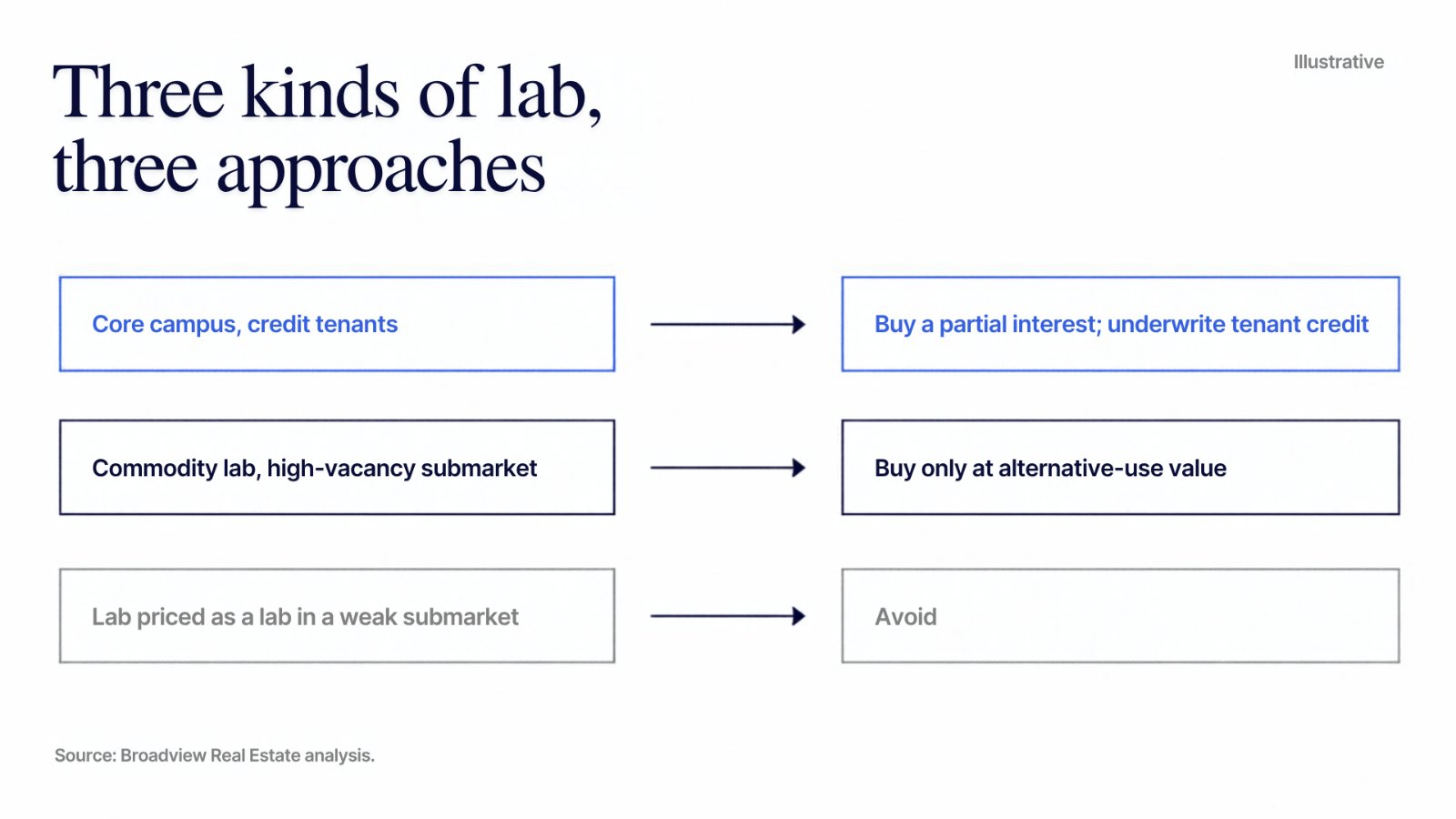
For the best assets, partial interests are the right structure. A buyer of a large stake in a core campus building, such as the 70% interest Clarion Partners bought in Seattle, gains access to an asset that rarely trades, at a time when the seller needs capital more than it needs control. The seller’s retained stake and continued management keep its operating interest aligned with the buyer’s. Underwriting should rest on in-place tenant credit and lease term, since record per-square-foot prices leave little room for re-leasing risk.
For commodity labs, the discipline is different. Underwriting should start from the value of the building in its best alternative use, whether technology tenants, office, advanced manufacturing or residential land, and treat a return to lab demand as upside. Diligence should cost the conversion in both directions: what it takes to adapt lab infrastructure to another use, and what it would take to restore it. Leverage should be modest, because lease-up in these submarkets may take years.
On timing, forced selling by the largest owner is concentrated in 2026, with the weighted-average closing date in the third quarter. That gives buyers with capital an unusual period of access.
The objection is that the best assets are already expensive
A reasonable objection holds that the core-campus approach buys at the top of the market. At $1,645 per square foot, a Mission Bay lab trades well above the cost of building comparable space, and a buyer pays for the scarcity of a fully leased campus in a recovering market. If biotech funding stalls again, even core tenants may give back space.
We take the concern seriously, and it is why we would pair the two approaches instead of choosing one. Core partial interests offer lower but more secure returns from credit tenants. Commodity labs bought at alternative-use value offer higher potential returns with a floor under them. The mistake to avoid is the middle ground: paying lab prices for buildings in submarkets where lab demand may not return for years.
Price each lab on what else it could be
The largest owner in the sector is now telling the market, through its own transactions, which of its buildings it expects to remain labs. Investors should read those transactions closely. In life sciences real estate today, the most useful number in an underwriting model may be the value of each building as something other than a lab.
“In life sciences real estate today, the most useful number in an underwriting model may be the value of each building as something other than a lab.”
Sources: Alexandria Real Estate Equities (SEC filings and earnings calls, via MarketBeat, ROIC.ai and Motley Fool); Bisnow; Banker & Tradesman; Commercial Observer; Cushman & Wakefield (via Webull and E-A-A); CBRE.